
Even the Birds
By Ruth Taylor
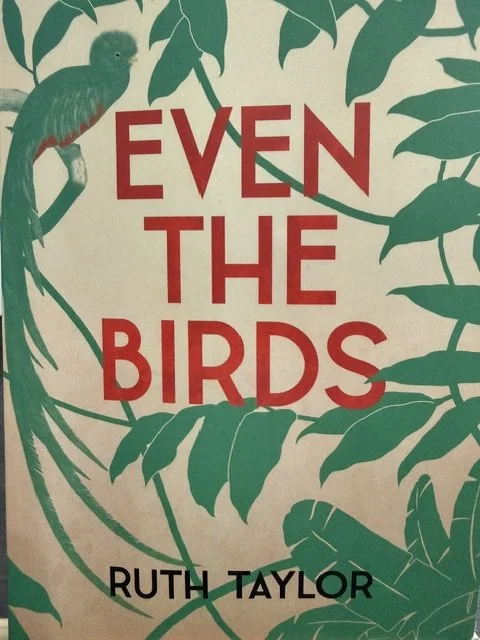
Even the Birds, set in the aftermath of the thirty-six year Guatemalan war, is an extraordinary historical fiction novel about conflict, class, race, regrets, family, and love. Isabel, a rebel fighter, returns home to her teenage daughter after leaving her in the care of an aunt, Soraida, since she was an infant. Although there was some contact throughout those years and Isabel is known to her daughter Yasmin, this premise by itself is ripe with possibility for complicated emotions, reactions, and human behaviour. Will Soraida give up on her parental role? Will Isabel and Yasmin have the connection necessary to foster a healthy relationship going forward? And how will the years at war play into Isabel’s mental health, as well as everyone else’s, and affect the dynamic between all three generations?
These are the types of questions I expected to explore when I started Even the Birds. And Taylor does expertly explore them. Every character is rich with human complexity, and relationships are reflected with carefully attention, leaving much for the reader to ponder.
But Taylor does so much more than that too. Through keen crafting of character profiles, Taylor goes further and expertly folds us into the story of the Guatemalan conflict itself. Soraida is an older woman of non-Indigenous heritage, and was raised with privilege. Years earlier, her brother, whom she loves dearly, married a Mayan woman and they had Yasmin. Both of Yasmin’s parents are subsequently killed during the war. The result is a complex family heritage of both non-Indigenous and Mayan descent across the three generations of women, as well as the interplay of being raised in varying environments that include (or don’t), the Indigenous way of life. Through this thoughtful mix of characters, we get remarkable insight into the history of that time and place, and the bumpy path they walked toward truth-telling and restorative justice.
As a Canadian, so much of this resonated. Although our social and racial tensions have not played out in the exact same way, we too are in a necessary time of truth-telling and listening with open hearts and minds in order to nurture reconciliation between the Indigenous people of Canada and the colonizers. This novel is not written about Canadian society, but perhaps it can and should be held up as a mirror to us and colonized nations across the world. Perhaps, along with a chorus of other books and essays and films and thought-pieces, this story is one more literary note in a much-needed melody advocating social change in a colonized and racialized world.
For that change we can hope. And more importantly, for that change, we can work.
They’d been, all of them, wandering in circles. Wandering the turning world. Doing their best. Yet there on the border bridge, feeling Guatemala slip away once more, failure coloured everything Isabel saw….So she’d turned again toward the front of the bus and concentrated on what lay ahead. Yasmin lay ahead. (p 231)
Even the Birds (Guernica Editions) is the winner of the 2025 Guernica Prize for Literary Fiction. I hope you take the time to read this important novel.