June 2026 Newsletter: Finding My Place
Someone recently told me about an environment where she felt too different, and wasn’t sure if she should take up space. It hurt my heart to hear this, and I immediately became her defender. Of course you can take up space, and should! But later that day I considered my response. Did I really believe it? Could I live by my own words?
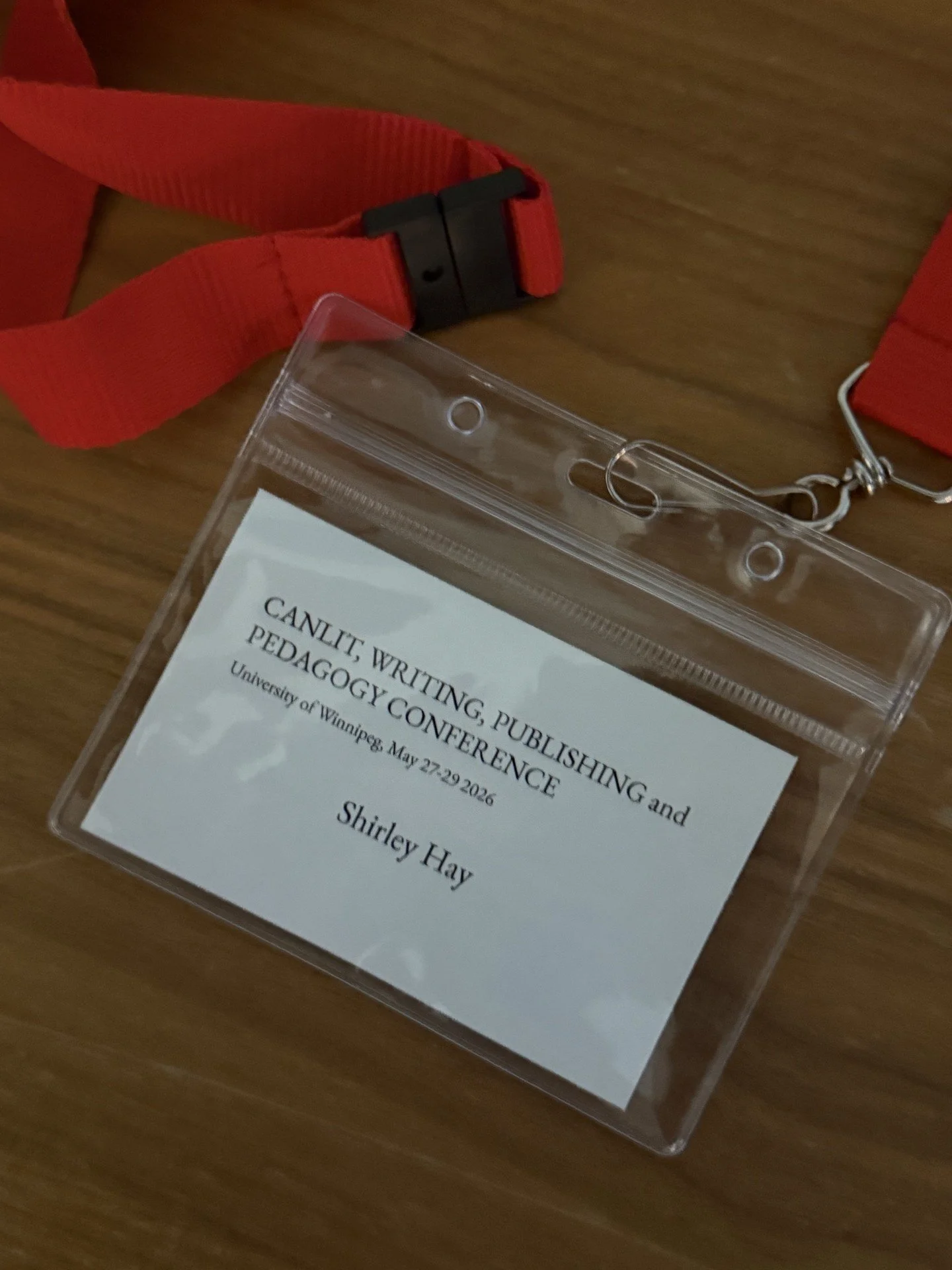
At the end of May, I attended a conference held at the University of Winnipeg entitled CanLit, Writing, Publishing and Pedagogy. It’s not uncommon to see a variety of literary events advertised in writing circles online, sometimes aimed at readers and sometimes (as was the case here) at writers or other professionals in the business. Since it was in Winnipeg and my week was otherwise light with responsibilities, I decided to sign up. I was excited to go to various workshops or panels to learn new things about craft or publishing, and I figured I’d meet a few people along the way. What I didn’t prepare myself for was the degree to which everyone would already know each other, and how intricately many of their lives already overlapped.
As the 3-day conference proceeded, I soon learned that most everyone I spoke with or sat next to was already published by a traditional publisher, and a great many were panelists or presenters as well. Authors and publishers and publicists were colleagues, but also friends. It’s possible that there were other early career writers like me there as well, but I suspect we were few and far between. Canada may be large, but the CanLit community appears small and tight-knit. Everyone I met was kind and generous, and not one person said anything to tag me as an outsider, but still, I struggled with that very emotion. Was I taking up space in a place that wasn’t meant for me?
The psychology of belonging is complex and layered. But at our core, we all have a human need not only to be accepted or welcomed in a space, but to belong to that group. I have a theory that this has a lot to do with shared experiences. Our overlapping memories bond us as identifiable generations, or as parents of babies or school-agers or teens, or as teachers or blue-collar workers or employers or students. (Or as writers). Anyone with a social media account and an algorithm can see how much we crave this kind of connection. This bond creates the conditions to joke or chat or reminisce about things like TV shows or music or fashion trends, and even more importantly, to feel the same things. When we laugh or even get angry together, that united front is empowering and electric. But when we don’t yet have the shared experience, or it differs a little too much, belonging to a group or within a space is less than straightforward.
As I sat in those conference rooms, I wasn’t sure if I belonged. Yes, I’d brushed up against the publishing world with Guernica Prize shortlist, but I didn’t have the same depth of shared experience as the others. Many there also had MFAs in Creative Writing, whereas my background is in psychology and family-centered studies, something that certainly informs my writing, but doesn’t have the same weight of credentials. Imposter syndrome can creep up on the best of us, an irritant in the background — but for those three days, I stared it dead in the eyes. My introversion whispered stay home. Rejection from my past yelled it louder.
But I didn’t stay home. I went back. Every day for three days, I took up my little portion of space. I did it quietly, because that’s who I am, but still I was there. Pushing myself to find my place. Choosing to exist there, in spite of the imperfect fit. And I’m okay with that.
Of course, to be clear, there are also times and places where we should not take up space because it clearly belongs to another group, especially when that group is less privileged in some way. Like all things in life, this discussion is nuanced by class, race, gender, and many other factors. None of my reflections are meant to negate that truth.
My conclusion? Yes, I can live up to my own advice. It’s not always easy, but sometimes doing the hard thing is the best way to claim our space, and find our place within it.
One of the most impactful moments of the conference for me was when one of the author participants spoke about the importance of readers. In a world of awards and credits and publicity opportunities and social media followers, sometimes the focus on the reader can get lost. When I was working on Fault Lines, I didn’t think much about the next stage of getting published. That process came after it was complete. But in those early days I did think a lot about who might one day read this book. I imagined readers connecting with the characters, feeling all the feelings, and maybe reflecting on the world in a slightly different way than they did before.
That’s the goal, and that’s my focus.
Book News:
I’m excited to announce that this November, Fault Lines will be available for purchase on my website!
Release Date: November 1st
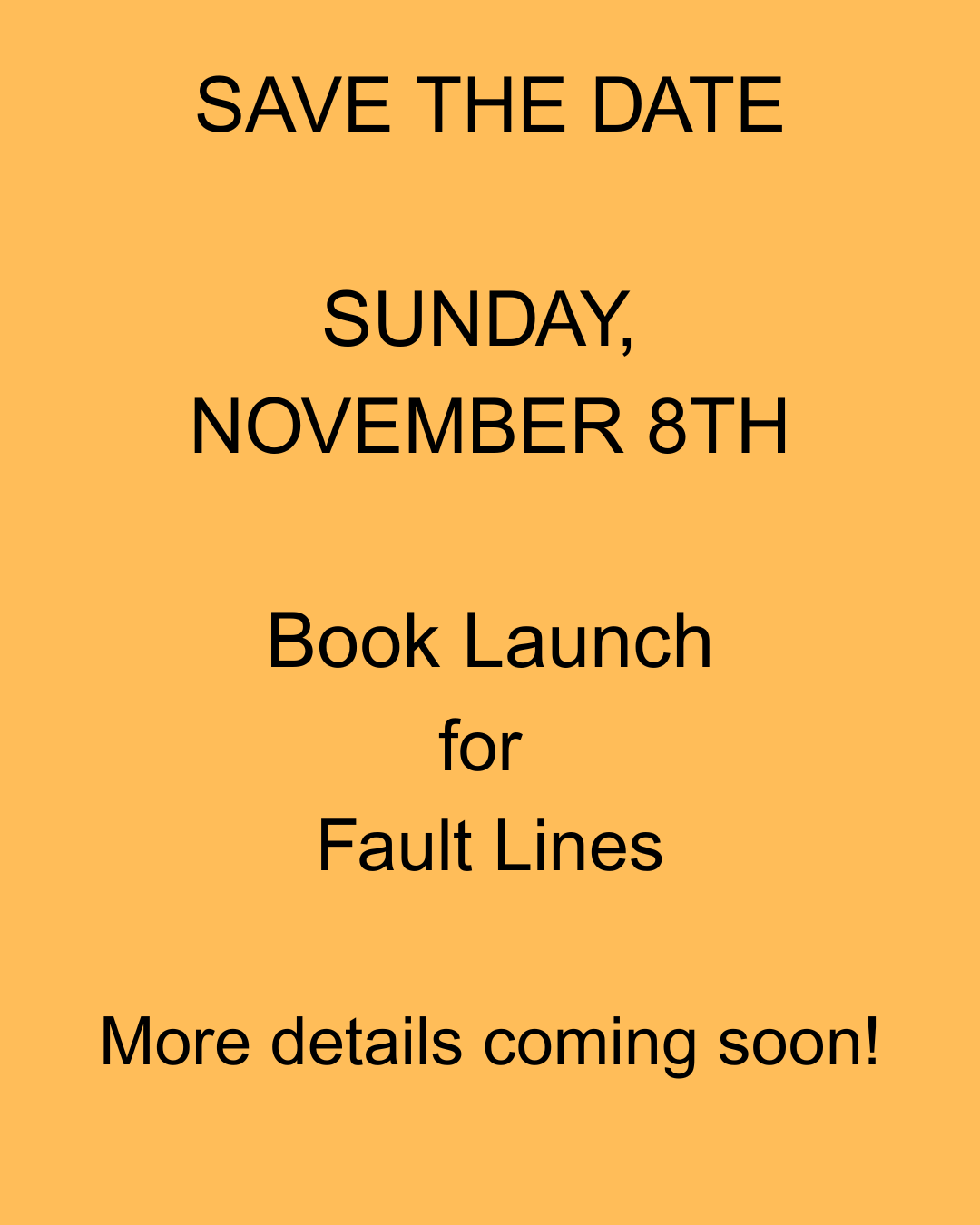
Book Launch Event: November 8th
Preorder: TBD
For the past few weeks, I’ve been busy with formatting and cover design discussions, the ARC (advanced reader copy) readers have it in hand now, and I’ve met with a local printer. Even more exciting, I’m in the process of planning a launch on Sunday, November 8th. This date is still a little tentative as we solidify a timeline with the printer, though it’s looking very positive. There are a lot more details to come, but it’s being planned as a coffee house feel with music, readings, refreshments, and lots of time to connect.
When considering a possible self-release of this novel, I thought a lot about the complexities of self-publication. Structures exist to make the process somewhat straightforward, including print-on-demand and other conveniences, but that meant uploading my manuscript into systems that have been known to train generative AI with stolen art. The issue of AI and its entanglement in society is complicated, but as a writer and a parent of a visual artist, I want to do whatever is in my control to minimize its effects. (Not to mention the environmental impacts, the effect it will have on learning and thinking, and so much more).
For that reason, I am choosing to sell Fault Lines primarily through my website and through local markets, with the intention of also getting into some local bookstores. I will have print copies available for purchase (shippable to anyone who is not local), and I will also have e-pubs available for those of you who use an e-reader. I’ve seen some beautiful examples of books at our Winnipeg based printer, and I can’t wait to see how they will bring this novel to life in print.
Will I be able to completely eliminate Amazon and other billionaires profiteers from the process of book selling? Likely not. Amazon owns Goodreads after all, a central place to post and read book reviews. And there are likely many more corporate entanglements that I don’t even know about. My goal cannot be perfection, but it can be reduction.

I’m so excited for the next few months, and I hope you are too! More details will be shared in the August newsletter, but also keep an eye on social media for announcements about things like preorders, the cover reveal and more. And if you found this in your spam folder, please mark this email safe so you don’t miss anything!
Thank you all for your support. You are my readers.
This is for you.
Love & Best Wishes,
Shirley